1. Coagulants and Flocculants
Coagulants destabilise these particles, while flocculants help them combine into larger clusters that can be removed through settling, flotation or filtration.
Shop Coagulants →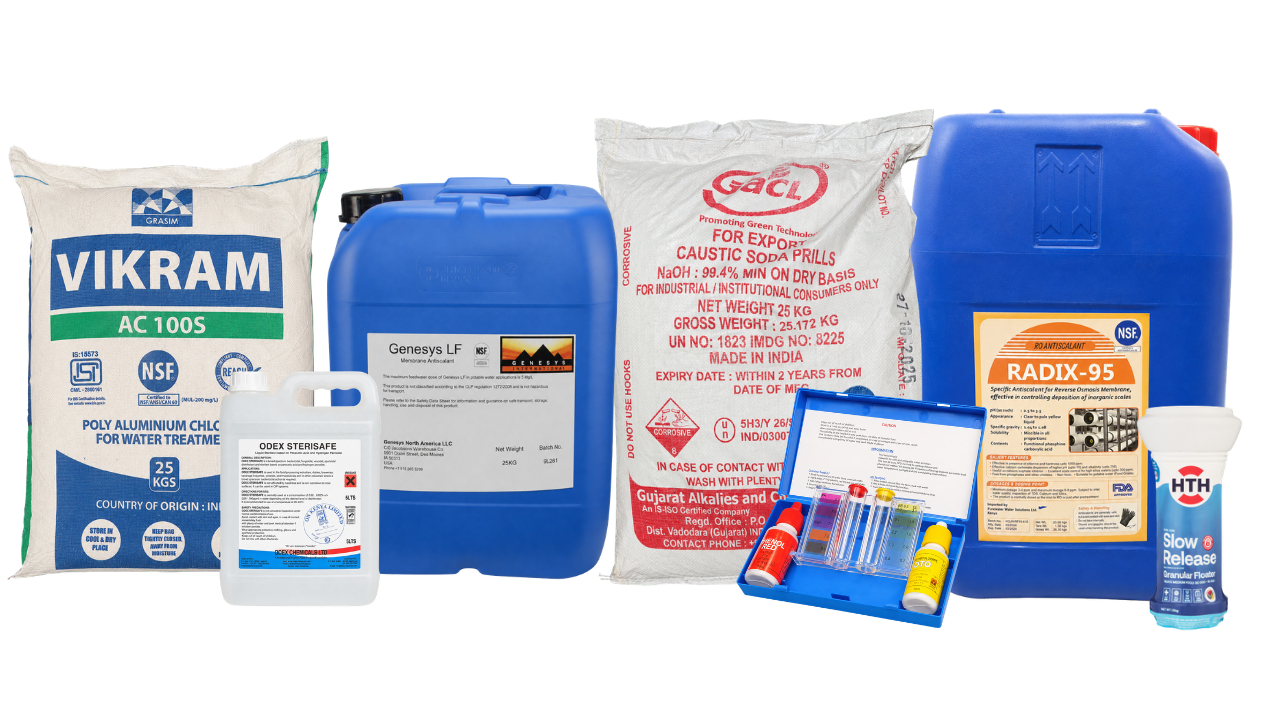
Coagulants destabilise these particles, while flocculants help them combine into larger clusters that can be removed through settling, flotation or filtration.
Shop Coagulants →As the concentration increases, minerals such as calcium carbonate, calcium sulphate, barium sulphate and silica may form deposits on the membrane surface. RO antiscalants help control these deposits.
Shop Antiscalants →Membrane performance may decline because of mineral scale, biological growth, organic matter, iron deposits or suspended solids.
Shop Membrane Cleaners →Disinfection chemicals help control microorganisms in drinking water, swimming pools, storage tanks and selected industrial systems.
Shop Disinfectants →Water pH influences chemical reactions, disinfection efficiency, corrosion, scaling and the performance of treatment processes.
Shop pH Adjustment Chemicals →Corrosion can damage pipelines, pumps, boilers, cooling systems and storage equipment. Corrosion inhibitors reduce the interaction between water and vulnerable metal surfaces.
Shop Corrosion Inhibitors →